Degree of protection of light fixtures against the penetration of solids and liquids.
IEC 529 - EN 60529 Standard.
(First digit – Solids / Second digit – Liquids)
IP55
5. Protected against dust penetration.
5. Protected against jets of water.
IP65
6. Hermetically protected against dust.
5. Protected against jets of water.
IP66
6. Hermetically protected against dust.
6. Protected against sea swells and similar.
Degree of protection against mechanical impacts provided by the enclosure.
In accordance with EN 50102.
IK08 (0.5 J), IK09 (1 J), IK10 (2 J).
CLASS I.
Functional insulation in all its parts and ground connection.
CLASS II.
Double reinforced insulation to avoid voltage in exposed metal parts.
Product certificates
All our products comply with applicable European Directives and Standards, authorizing free circulation within the European Economic Area (EEA). We also comply with the Electromagnetic Compatibility (EMC) Directive and the Low Voltage Directive. We certify with ENAC-accredited external laboratories.
We comply with the Restriction of Hazardous Substances (RoHS) Directive for electrical and electronic components. We also comply with the Waste Directive (RAEE/WEEE) for respectful waste management.
Analysed Impact Categories
The life-cycle analyses have been performed using the guidelines ISO 14040 (Life cycle analysis – Principles and framework) and ISO 14044 (Environmental management – Life cycle assessment – Requirements and guidelines).
Acidification
Indicator of potential acidification of soils and water (increase in pH). Associated with the death of plantlife, low crop yields, soil infertility, contamination of water-based ecosystems, etc.
Method and unit
EF v3.1 | acidification | accumulated excess (AE) (mol H+-Eq)
Climate Change
Indicator of greenhouse gas emissions (GHG) which contribute to climate change in the atmosphere. Associated with the increase in temperatures and changes in climate patterns due to the greenhouse effect.
Method and unit
IPCC 2021 | climate change | global warming potential (GWP100) (kg CO2-Eq)
Ecotoxicity
Indicator that measures the toxic effects of chemical compounds in the ecosystem. Associated with the bioaccumulation of toxic compounds, the death of living organisms and the alteration or breakdown of ecosystems.
Method and unit
USEtox | ecotoxicity | total (CTU)
Depletion of Fossil Fuels
Indicator of the depletion of non-renewable fossil fuels. Associated with the concern that these limited energy resources will not be available in the future based on current consumption patterns.
Method and unit
CML v4.8 2016 | energy resources: non-renewable | abiotic depletion potential (ADP): fossil fuels (MJ)
Eutrophication
Indicator of the enrichment of the freshwater ecosystem with nutrients. Associated with the excessive growth of algae in bodies of water, a lack of oxygen and the death of aquatic organisms.
Method and unit
CML v4.8 2016 | eutrophication (kg PO4-Eq)
Land Use for Agriculture
Indicator of the use and transformation of land with agricultural potential for other purposes, such as forests, roads, industrial areas and mineral extraction, among others.
Method and unit
ReCiPe 2016 v1.03, midpoint (H) | land use | use of agricultural land (LOP) (m2 cultivo-Eq)
Depletion of Minerals and Metals
Indicator of depletion of metal and mineral resources. Associated with the concern that these extremely scarce, non-renewable resources will not be available in the future.
Method and unit
CML v4.8 2016 | material resources: metals/minerals | abiotic depletion potential (ADP): elements (last reserves) (kg Sb-Eq)
Water Use
Analysis of water use in transformation processes. Water use can stem from a wide range of sources, from its direct use in production processes to its indirect use in hydroelectric power.
Method and unit
ReCiPe 2016 v1.03, midpoint (H) | water consumption potential (WCP) (m3 H2O)


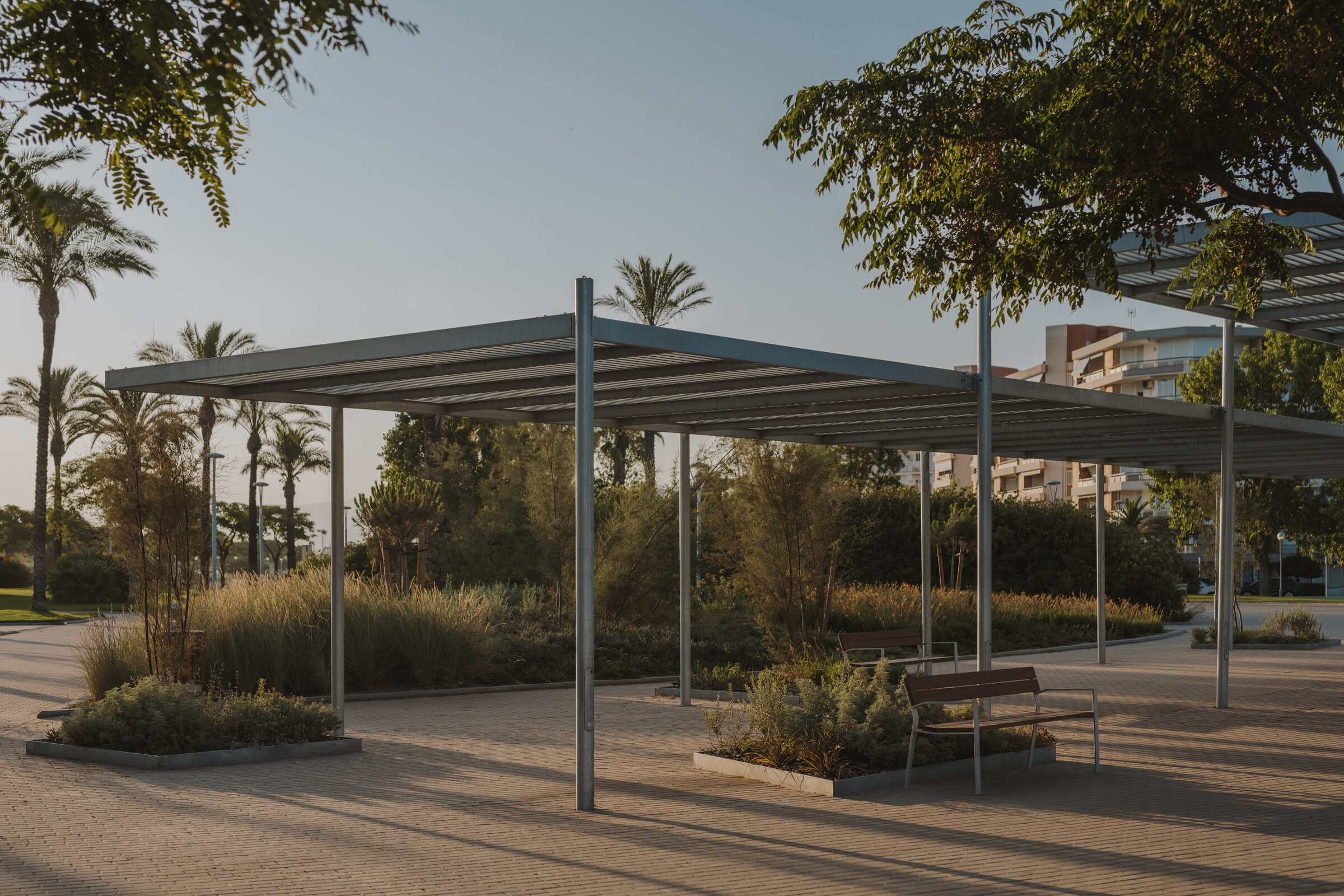


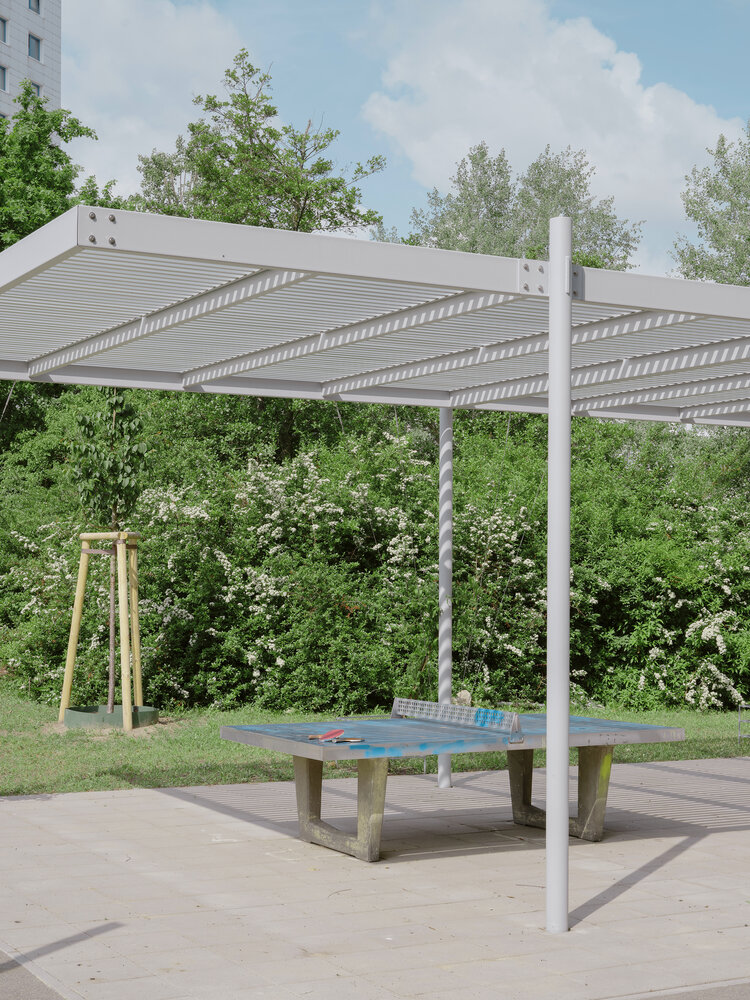
Functional modularity
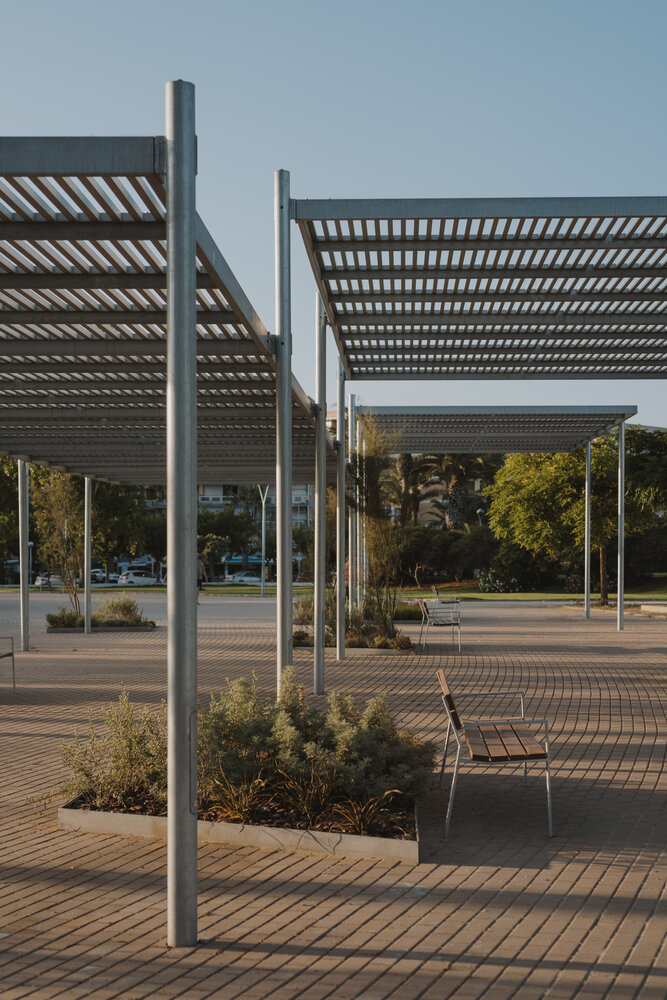
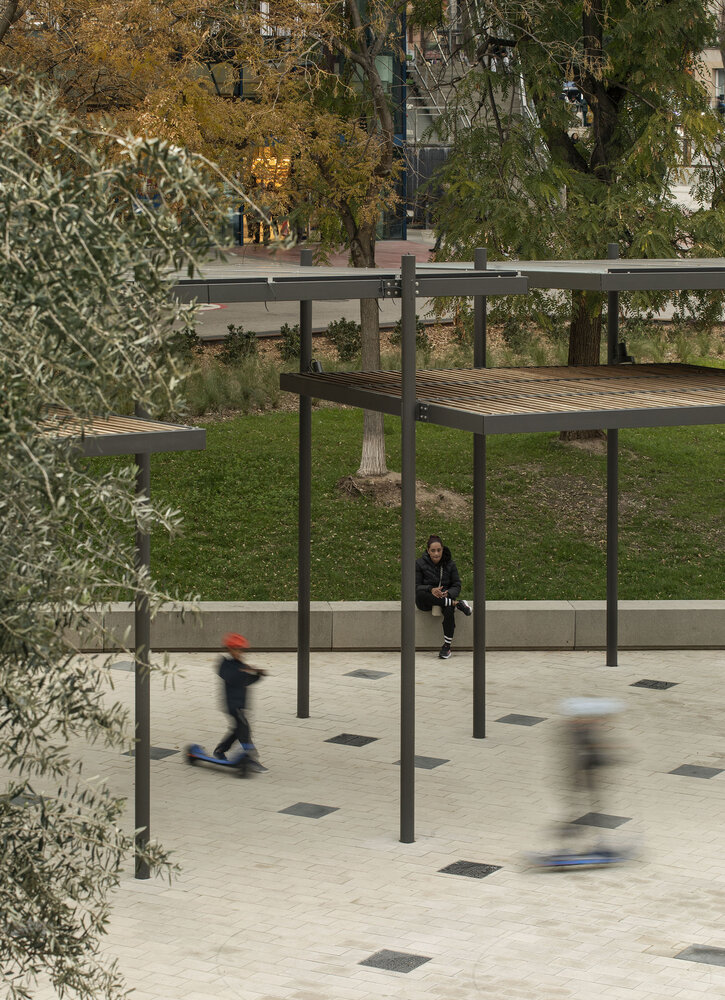
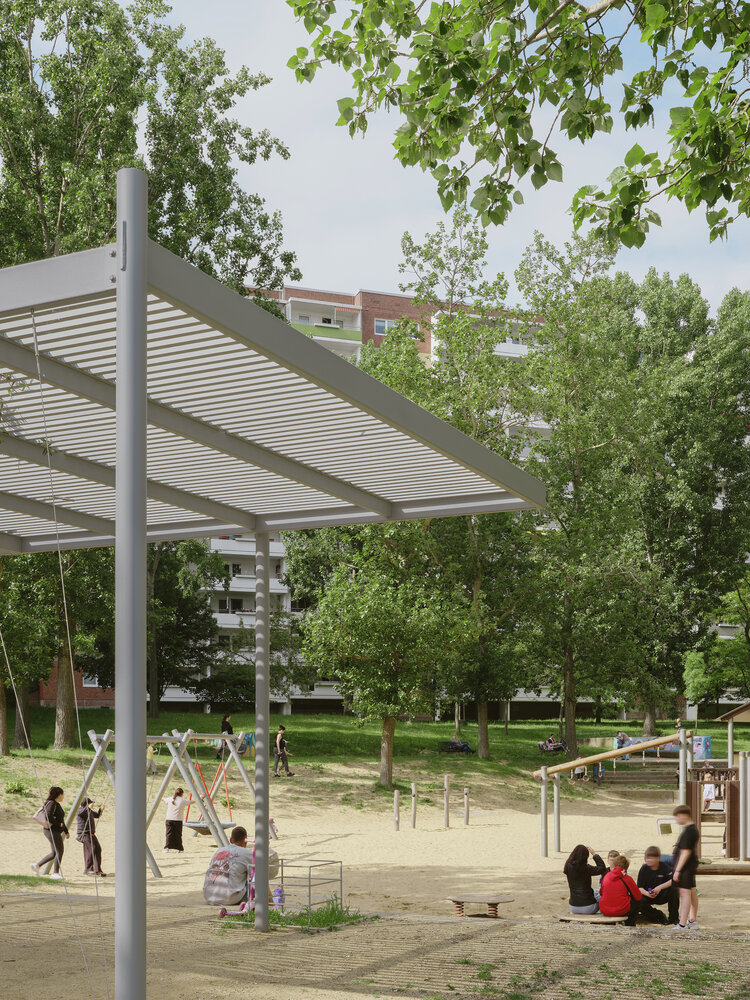
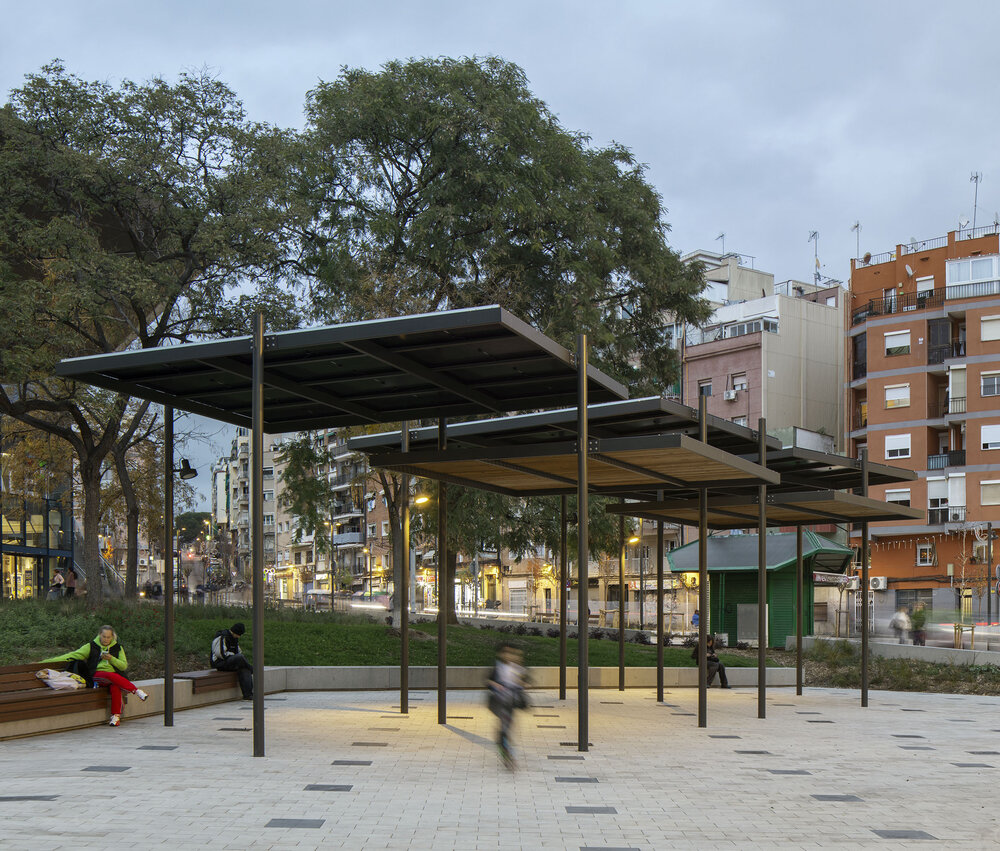
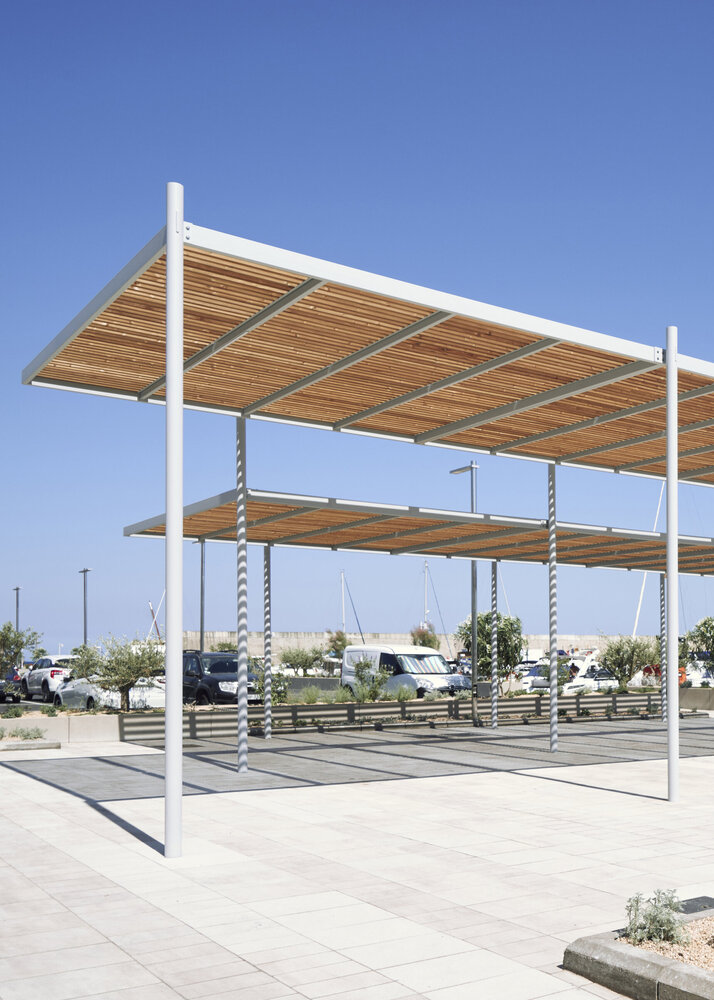
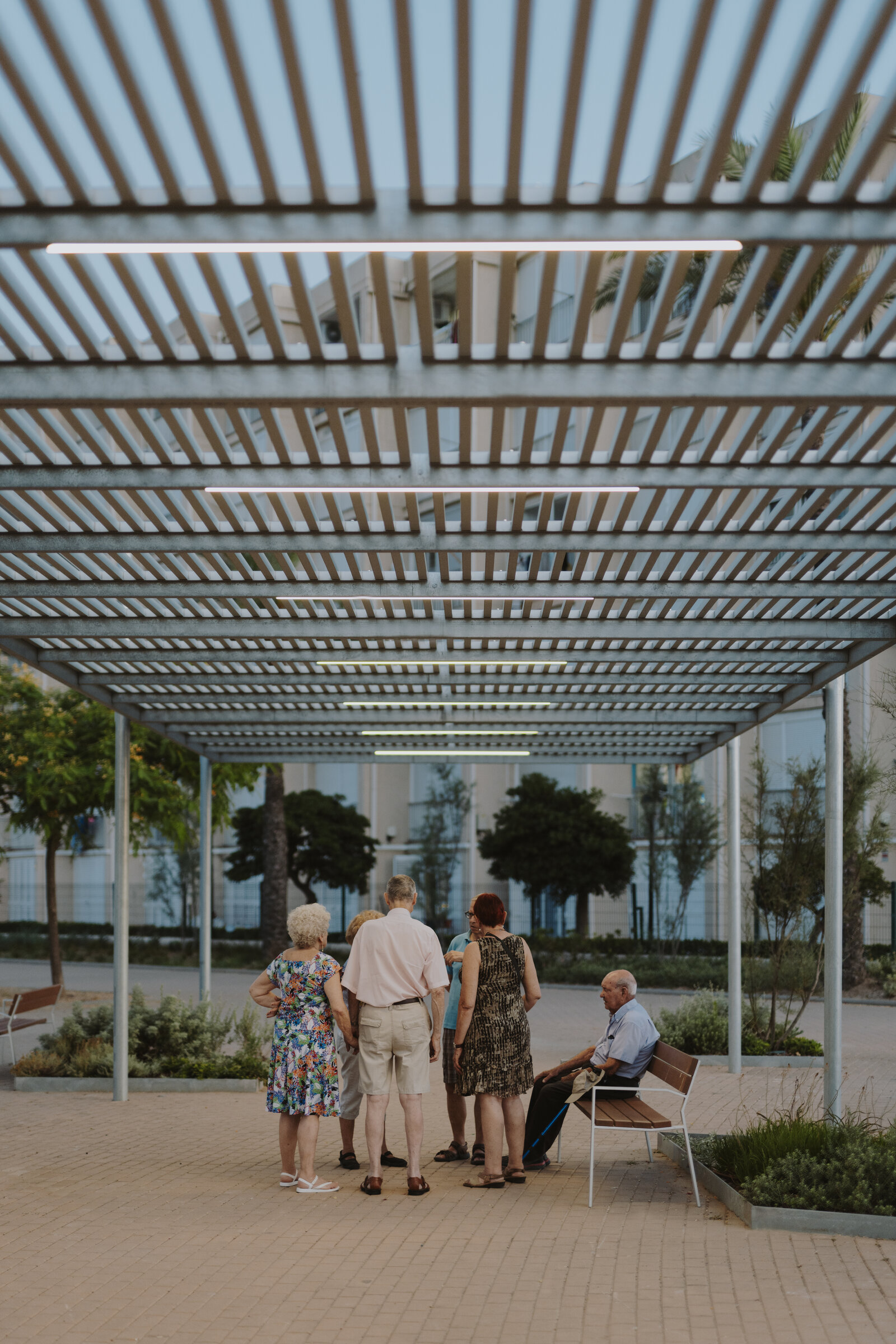
The Persol urban pergola allows the coverings to be aligned at the same or different heights, and it allows the perimeter supports to be laid out with three or more pillars, sharing the shade modules, or not. Freedom in terms of composition, and restrained materials to undertake the multiple functions of the new outdoor space, which promote communal use.
- Great shade coverage of 25 m², available in three different covers:
-
- Photovoltaic cover: composed of modules made of double 4 mm tempered glass photovoltaic panels with high-power PERC cells encapsulated in polymer.
- Wood cover: composed of eight modules of 40×45 mm slats made from Class 4 brown autoclave-treated Flanders pine.
- Aluminium cover: composed of eight modules of 40×40 mm anodised aluminium slats.
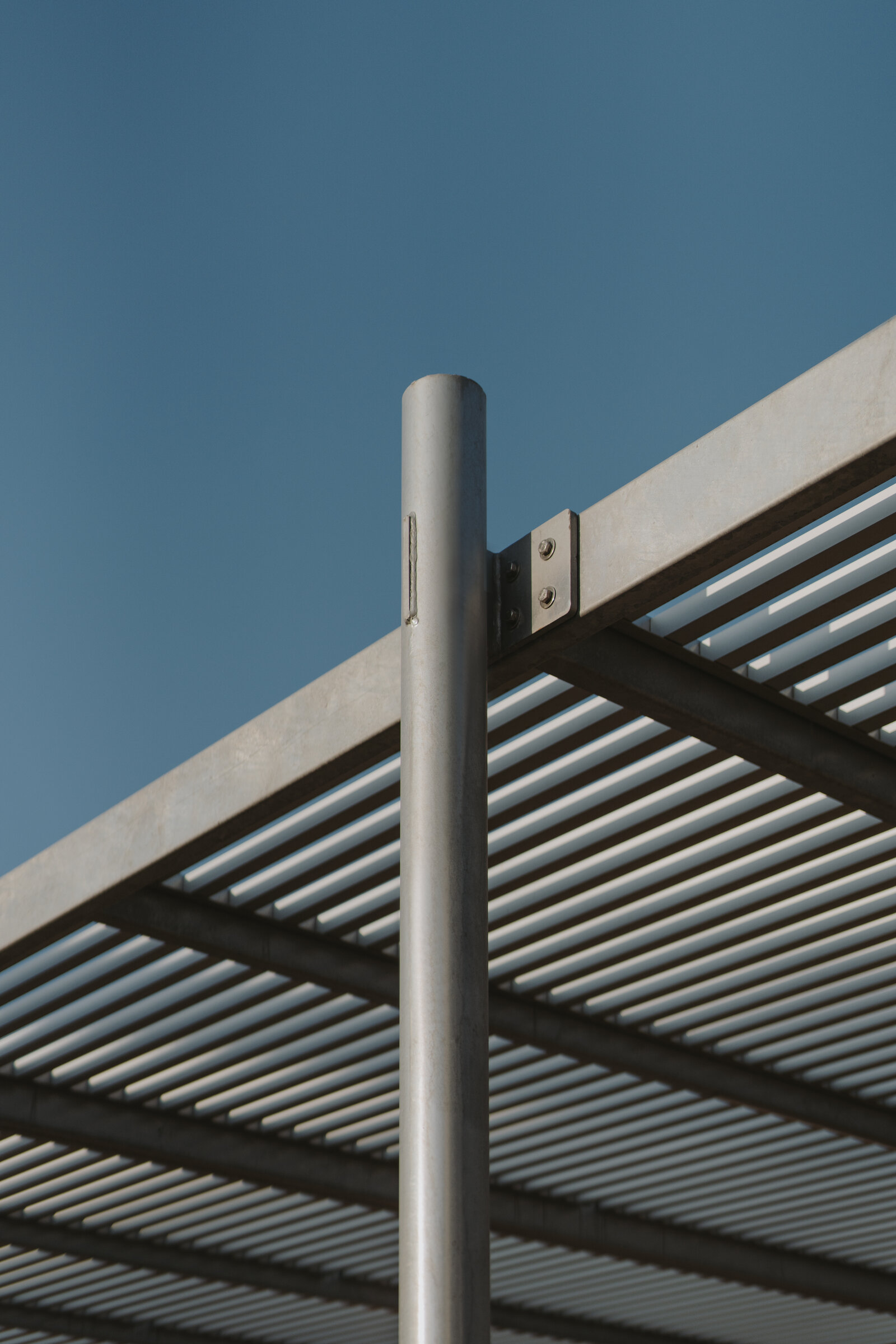
- The supporting structure consists of 150×50 mm perimeter profiles, 120×50 mm crossbeams, and Ø114.3 mm pillars, all made of hot-dip galvanized S275 JR steel and optionally finished with protection paint.
- The screws are made of A4 stainless steel.
Structure

Light grey
Cover

Autoclave pine

Photovoltaic panel

Aluminium anodised
The colours shown are purely indicative.
Other colours are available upon request.
Check finishes for marine environments.
System power (W)
High efficiency optical unit
- 2x 1.5 m Linear LED 22.5W
Colour temperature (K)
- 3300K 80CRI
Photovoltaic
Shade


Urban
Type V

All our products support remote regulation, both individually and in groups, through the most standardised control systems, significantly reducing energy consumption and eliminating light pollution. We adapt our products to safeguard biodiversity and respect circadian rhythms, eliminating harmful wavelengths.
Our luminaires comply with the American IESNA LM80 and TM21 standards.
1-10V / 0-10V
Analog one-way regulation protocol that, through a signal between 1 or 0 and 10 V, allows remote linear control of the luminous flux between 10% or 0% and 100%. The standard programming is as follows: Vi ≥ 8V – 100%; Vi ≤ 1V – 10%.
DALI
Two-way digital communication protocol (Digital Addressable Lighting Interface) that allows grouping, regulating, and turning off the luminaire, using an 8-bit resolution with 254 regulation steps and receiving information about its status for maintenance.
Automatic programming
Individual, self-managed programming in the product and bi-directional. It is configured prior to installation. It is useful in projects that require a single pattern throughout the product’s life. It incorporates automatic regulation steps with geolocation and real nighttime cycles.
Example: 100% from 21:00 to 22:00; 70% from 22:00 to 01:00; 50% from 01:00 to 05:00; 70% from 05:00 to 08:00.
Automatic control panel programming
Individual, self-managed programming in the control panel and one-way. It is configured prior to installation. It can coexist with other analog voltage reduction technologies, such as phase-cut. It is useful in projects that need different patterns throughout the year or the product’s life.
Example: Summer 100% from 21:00 to 22:00; 70% from 22:00 to 01:00; 50% from 01:00 to 05:00; Winter 100% from 16:00 to 22:00; 70% from 22:00 to 01:00; 50% from 01:00 to 08:00.
Command line programming
Group regulation, in the control panel and one-way. It requires the installation of an additional control electrical line besides the power line (2×2.5mm2). It is useful in projects that need simplified regulation.
Lighting Flow dimmer programming
Group regulation, in the control panel and one-way. It requires the installation of a stabilizer/voltage regulator in the control panel and product configuration to interpret the correlation between line voltage and power. It is useful in projects that need a simplified system with existing regulators.
Example: Vi ≥ 230V – 100%; Vi ≤ 185V – 60%
Constant Luminous Management (CLM)
Optional function parallel to the programming that maintains the project illumination levels constant throughout the installation’s life, increasing the luminaire’s power proportionally to the LED depreciation. Our standard programming is 0h 80%; 60,000h 100%.
Temperature control
Optional automatic protection to safeguard the integrity of the lighting components. It monitors the maximum temperature, activating a flow reduction to recover an acceptable value.
Surge protection
Protector against voltage spikes caused by thunderstorms. Sized for a maximum discharge current of 10kA.
- Pillars fixed in a concrete block on-site, 20 cm below the pavement level, with groove for electrical connection, and four M18 J bolts per column.
- Entirely mechanical installation, with no welds, using A4 stainless steel screws.
- It includes a recessed linear LED luminaire on two crossbeams.
- The element is supplied disassembled, in four components: pillars, girders, crossbeams, coverings.
- Installation and assembly instructions, screws, and J bolts included.
- It does not require functional maintenance, except to preserve the original color of the wooden grids and the periodic cleaning of the photovoltaic panels.
- Element calculated for type II terrain and wind of 29 m/s, with ground made from loose or moist sand with medium compactness (E0= 4800 kN/m2) and HM-20 concrete foundations.
- We offer adaptations for more demanding terrain typologies and climate conditions.

CE

RoHs

IP67

IK08

Clase III
- 4.8 kWp per module (310 Wp x 15 photovoltaic panels)
- STC (standard measurement conditions):
– 1000W/m² of irradiance
– AM 1.5 spectral distribution
– Temperature 25±2ºC
Impact
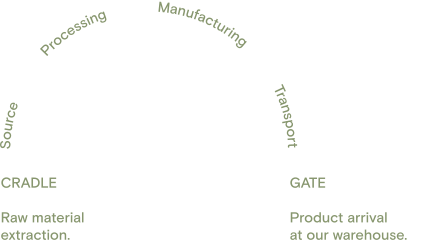
Life Cycle Assessment (LCA) allows us to measure the environmental footprint of our products across all stages of their life cycle. Through this tool, we evaluate and reduce the impact of urban design, contributing to the creation of more responsible and sustainable cities.
How is it calculated?
kg CO₂-Eq / Carbon footprint
PCC 2021: Global Warming Potential (GWP100)
MJ / Energy consumption
EF v3.1 EN15804: Abiotic Depletion Potential (ADP) - Fossil Fuels
m³ / Water consumption
EN15804 and ISO21930: Net Use of Fresh Water
Material
Manufacturing processes
Electronic components
Transport
Typology